Staff Spotlight: How Paris Changed the Way I See Public Space

Renaissance’s Sheldon Morris reflects on his time living in France.
The City of Paris played a significant role in my decision to pursue urban planning/design.
The architecture, the landscapes, the ease of movement (without the need of a vehicle of course), the Seine River bisecting the city, and the quais along it bustling with life and activity, I was hooked. Honestly, I did not think too deeply about public spaces until seeing the stark contrast between American planning/design and the French.
It was around late 2019. I was in my last semester of my undergraduate program, and I had decided to take a solo trip to the city of light. It was that August I visited the city for the first time. Walking around semi-aimlessly (my 22-year-old self-did not care much for a “must-see” list), I began to understand how the intersection of history, modernity, and environmentalism can shape a place into something both functional and beautiful. This was not an accident; it was the result of some good planning.
A place where even a mundane trip for some groceries can result in seeing something memorable. I remember walking around, taking in the sights, the public squares, small parks, and gardens, and thinking, “wow, I want to learn how to create something like this.” Around 2021, I returned and lived in the city for the next four years. That first experience in 2019 is the reason I decided to pursue urban planning and design, to earn my master’s degree, and then start my career in the city.
The French do quite a few things very well, and designing public spaces is one of them. From the Jardin des Luxembourg, Place des Vosges, or Parc des Buttes-Chaumont, these public spaces serve as a green core for their respective neighborhoods, with all surrounding sidewalks leading into them, urging you to explore deeper.
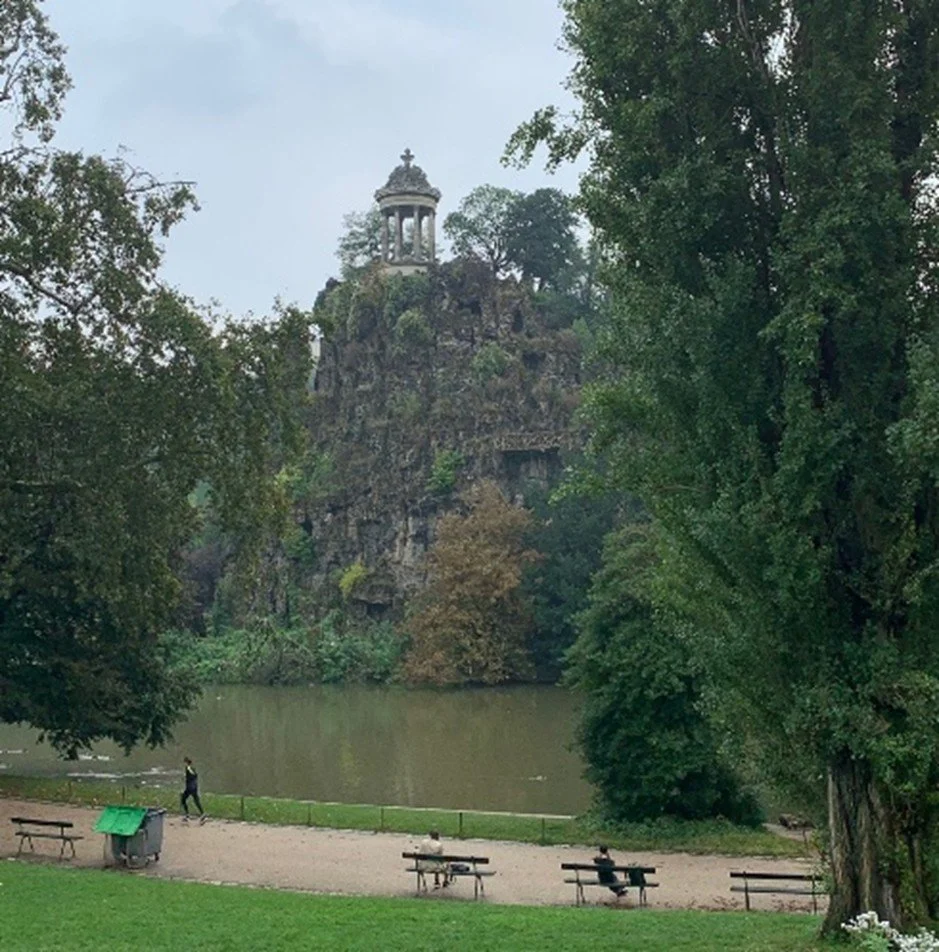
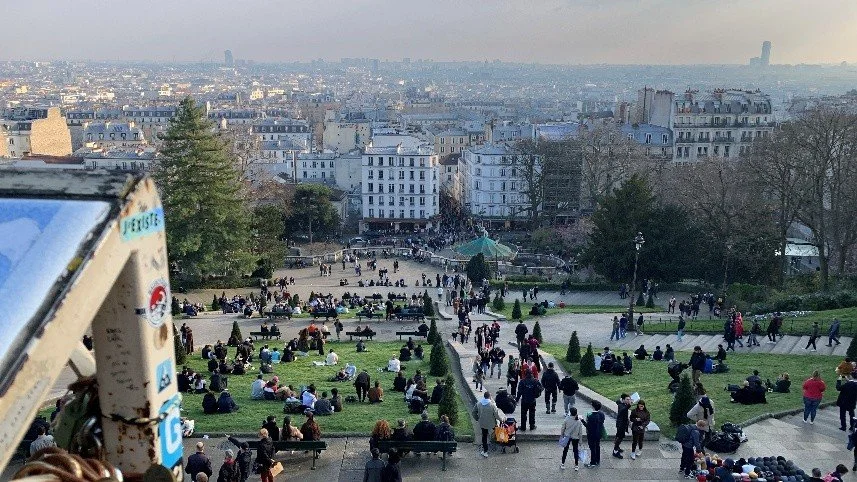
Then, there are the quais along the Seine River. Once used as motorways, the city has since focused on pedestrianizing the quais, as well as much of the city.
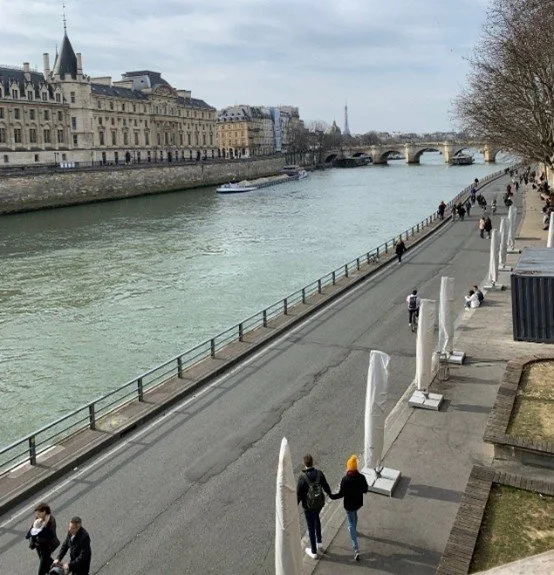
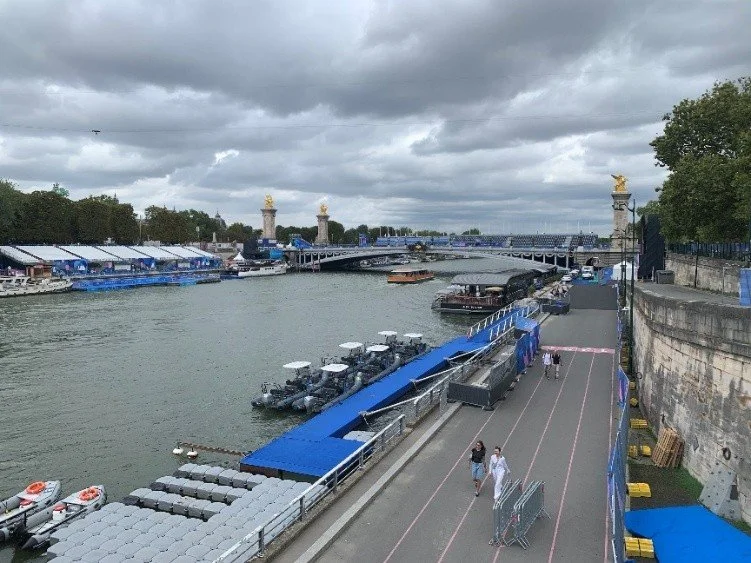
In fact, within the last 25 years, Paris has become one of the leading cities in Europe for sustainable urban policy. Much to the chagrin of motorists, during my time there the then mayor, Anne Hidalgo, made a huge push for reducing the number of driving lanes and converting them into bike lanes (my favorite—if you visit Paris anytime soon, please use a bike, it is a great way to experience the place. Download an app called Velib’, it is the city’s bike sharing system). Plus, within the city limits, higher-emission vehicles have been restricted through low-emission zone policies, so beware of the electric cars that barely make noise (I almost learned this the hard way). All these factors contribute to a greener, cleaner Paris.
That is also without mentioning the superb metro network, which gives people a practical alternative to driving and is more efficient for getting around. It is currently being expanded into the suburbs through the Grand Paris Express project (Adding about 125 miles of new automated lines and 68 stations by 2031, connecting suburbs directly to reduce travel times.) which should be on every American designer/planner’s radar. The amount of transit-oriented development underway there is interesting.
There are a lot of factors coming together for Paris’s strides in planning and design (not all are positive, of course—gentrification is present like in every other major city). In the modern day, three main reasons come to mind.
High standards, regulations, and cultural regard for paysagistes(trained landscape architects with a strong design tradition in public space). Every public space will have some kind of intentional landscaping; an open lawn is treated as a blank canvas there.
Political will. The taxes paid in France are quite high and proportional to income, but you get to see them at work very quickly, the public services are very good (although a metro card subscription can get a bit pricey, there are some good plans that let you pay per use).
Development patterns. As I stated, the city was not always this pedestrian friendly. Even though the city is about 2,000 years old, the automobile took hold for quite some time. Before the 2000s, it was much more car-centric, like trends seen in the U.S., the traffic and smog throughout the city was quite unpleasant. Starting in 2001, with Mayor Bertrand Delanoë, the Paris Respire program introduced car-free zones, and by 2014, when Mayor Hidalgo took office. She began advancing ideas aligned with the 15-minute city concept and pushing environmental initiatives.
This shift has happened in the last 25 years, so it shows that it can be done if the political will is there and people are ready for it. My time in Paris has shaped me into the designer I am today. That experience continues to guide how I approach projects, particularly in the belief that design must appear from an understanding of place and the people who shape it.
When people enter a public space, the goal should be to create an environment that feels intuitive, welcoming, and worth spending time in; where movement is easy, and even everyday moments can become something memorable.
-Sheldon Morris
2026